New review paper on AI for droughts

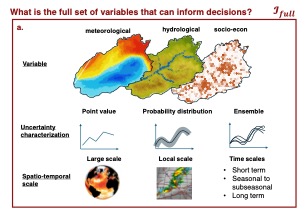
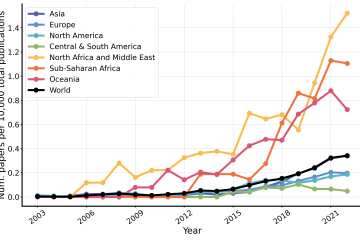
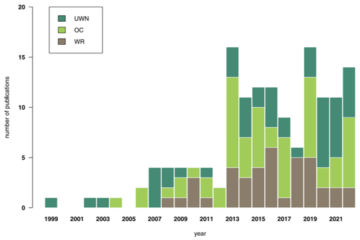
The eiLab contributed to a systematic review assessing how machine learning has been used in drought research over the past two decades. Published in Water Resources Research, the review analyses 544 scientific papers on machine learning for drought science, focusing not only on which methods are used, but also on

New publication on AI for water quality management

We are pleased to share a new publication developed in collaboration with colleagues from the University of Cambridge, the Environment Agency, and several UK partners. This perspective explores the potential of artificial intelligence (AI) to support water quality management and regulation, addressing increasingly complex challenges driven by climate change, pollution,

Model Predictive Control of Water Resources Systems: A Review and Research Agenda

The eiLab led a study in collaboration with Technische Universität Berlin, Einstein Center Digital Future, Delft University of Technology, University of Melbourne, TU Dortmund University, Universitat Politècnica de Catalunya – BarcelonaTECH, and University of Seville, to carried out a systematic review on Model Predictive Control (MPC) and its recently gained increasing interest in

Climate Change Awareness, Perceived Impacts, and Adaptation from Farmers’ Experience and Behavior: a Triple-Loop Review

The eiLab carried out a systematic review to identify the current research trends and set the future research agenda on climate change awareness, perceived impacts and adaptive capacity from farmers’ experiences and behavior.  Individuals and communities socially construct risk, and societies with greater risk perception may be more apt to

Tropical Cyclone Genesis Potential Indices in a New High-Resolution Climate Models Ensemble: Limitations and Way Forward

The eiLab participates in a study in collaboration with colleagues from the Fondazione Centro Euro-Mediterraneo sui Cambiamenti Climatici, to address the questions of whether Genesis Potential Indices (GPIs) are still relevant in the era of Tropical Cyclones-permitting climate model ensembles, and whether they have sufficient predictive skills.  Tropical Cyclones (TC) are extreme

Balancing Sediment Connectivity and Energy Production via Optimized Reservoir Sediment Management Strategies

The eiLab led a study in collaboration with colleagues from the University of Padova and Stanford University, to develop a sediment routing model (D-CASCADE) able to assess the impacts of reservoirs and their management strategies on river sediment connectivity.  Trade-offs between hydropower generation and sediment connectivity across cascades of multiple

A dynamic, network scale sediment (dis)connectivity model to reconstruct historical sediment transfer and river reach sediment budgets.

The eiLab led a study in collaboration with colleagues from the University of Padova and Macquarie University, for the development of a new dynamic sediment (dis)connectivity model, and its application for river basin study and management. The result is the basin-scale, dynamic sediment connectivity model D-CASCADE, which combines concepts of