Balancing Sediment Connectivity and Energy Production via Optimized Reservoir Sediment Management Strategies

The eiLab led a study in collaboration with colleagues from the University of Padova and Stanford University, to develop a sediment routing model (D-CASCADE) able to assess the impacts of reservoirs and their management strategies on river sediment connectivity.  Trade-offs between hydropower generation and sediment connectivity across cascades of multiple

A dynamic, network scale sediment (dis)connectivity model to reconstruct historical sediment transfer and river reach sediment budgets.

The eiLab led a study in collaboration with colleagues from the University of Padova and Macquarie University, for the development of a new dynamic sediment (dis)connectivity model, and its application for river basin study and management. The result is the basin-scale, dynamic sediment connectivity model D-CASCADE, which combines concepts of

A basin-scale approach to estimate river forms resilience to sediment connectivity alterations in data-scarce environments.

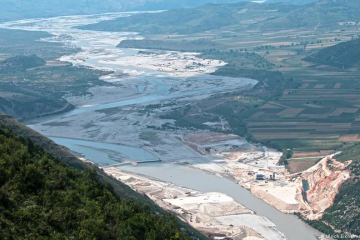
EiLab just published a paper on Earth Surface Processes and Landforms (ESPL), which showcases the potential of the CASCADE toolbox to estimate basin-scale river sediment (dis)connectivity, in terms of distributed outputs on sediment delivery and composition. The model was applied on the Vjosa river, one of the last wild river