New review paper on AI for droughts

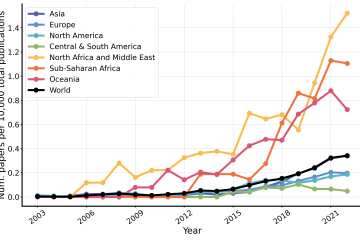
The eiLab contributed to a systematic review assessing how machine learning has been used in drought research over the past two decades. Published in Water Resources Research, the review analyses 544 scientific papers on machine learning for drought science, focusing not only on which methods are used, but also on

New publication on AI for water quality management

We are pleased to share a new publication developed in collaboration with colleagues from the University of Cambridge, the Environment Agency, and several UK partners. This perspective explores the potential of artificial intelligence (AI) to support water quality management and regulation, addressing increasingly complex challenges driven by climate change, pollution,

New paper out: A Deep Learning Framework for Extreme Storm Surge Modeling Under Future Climate Scenarios

Sea-level rise is increasing coastal flood risk, with storm surges playing a critical yet highly uncertain role. While physics-based hydrodynamic models remain the reference for simulating these processes, their computational cost limits their use for large ensembles and long term scenario analysis. In the study published in Earth’s Future, the

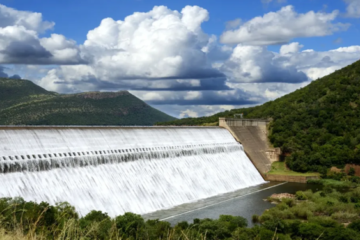
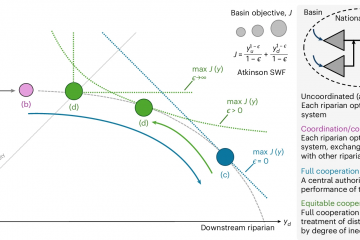
Balancing Energy, Irrigation, and Environmental Demands in the Zambezi Watercourse: Operations and Sequencing of New Dams

The competition for water, energy, and food is intensifying, and this is happening at a time when society is increasingly aware of the environmental trade-offs involved in building more dams.The EI lab led a study in collaboration with Delft University of Technology published in Earth’s Future in which a new optimization framework has been described to

Model Predictive Control of Water Resources Systems: A Review and Research Agenda

The eiLab led a study in collaboration with Technische Universität Berlin, Einstein Center Digital Future, Delft University of Technology, University of Melbourne, TU Dortmund University, Universitat Politècnica de Catalunya – BarcelonaTECH, and University of Seville, to carried out a systematic review on Model Predictive Control (MPC) and its recently gained increasing interest in