RAWS: When Artificial Intelligence Meets the Water Cycle
An innovative project that aims to investigate how humans influence the natural hydrological cycle, through the analysis of existing data and the study of socioeconomic dimensions related to water.
Water is at the center of one of the most complex challenges in environmental research: understanding not only how it moves through the natural hydrological cycle, but also how much and where human intervention is altering it. This is the goal of RAWS: Re-Analysis of Water for Society , an international project involving the DEIB Environmental Intelligence Lab team, led by Professor Andrea Castelletti and Professor Sandra Ricart.
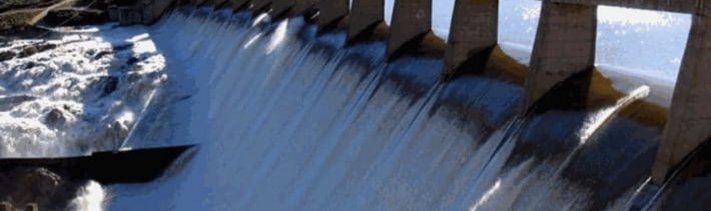
Global reanalysis datasets, composed of historical data on precipitation, flow, and hydrological variables, have existed for decades to build predictive models and conduct analyses from regional to global scales. The limitation of these inventories is that they represent only the processes of the natural hydrological cycle, without considering the impact of human infrastructure: dams, wells, irrigation systems, and abstraction points. In some cases, the human footprint can even dominate natural processes.
This project will therefore add to the existing datasets anthropogenic data, such as decisions made by operators to manage infrastructure, as well as data relating to other sectors, such as energy and agriculture, which are highly dependent on hydrological processes. The ultimate goal of the RAWS project is to expand existing datasets to incorporate human decision-making, on a very high-resolution 1 km × 1 km grid. Where direct observations are lacking, the model generates virtual observations using interpolation algorithms.
The most significant expected outcome is to quantify the percentage and spatial distribution of the human footprint on the global hydrological cycle and determine the factors that shape this behavioral dimension within the water cycle. This information could radically change the way we manage water resources in the decades to come. The project, funded by Schmidt Sciences and led by Utrecht University, involves case studies across four continents, including the Mekong Basin, Mississippi River, California, the Murray-Darling system in Australia, and several areas of sub-Saharan Africa.
In this project, the implementation of artificial intelligence plays a central role on multiple fronts: managing huge volumes of data, identifying the most influential variables on water signals, and transfer learning—training a model on a well-documented basin and transferring that knowledge to areas where data is scarce. Added to this is inverse reinforcement learning, to automatically extrapolate the decision-making logic of water operators, such as the rules by which a dam manages its releases.
But modeling infrastructure isn’t enough: it’s important to understand how local communities perceive the changes. In the Mekong Delta, where the team has already initiated surveys with local agricultural bodies, critical situations have emerged: sediment erosion, an aquifer that is almost completely isolated in some places, and land increasingly unavailable for rice. Farmers are adapting independently, switching to low-water-use varieties, changing crops, or converting to aquaculture.
Collecting these perceptions helps define socioeconomic indicators to be integrated into the global dataset, making the models more relevant to the reality of different contexts.